
Jinn
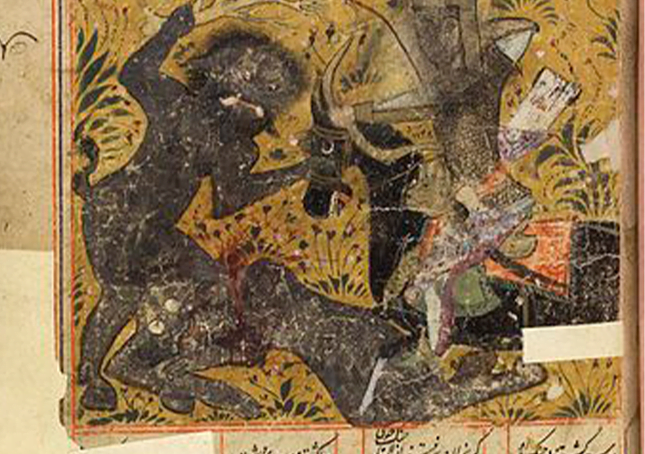
Jinn (Arabic: جن, jinn)—also romanized as djinn or anglicized as genies (with the broader meaning of spirits or demons, depending on source)—are supernatural creatures in early pre-Islamic Arabian and later Islamic mythology and theology. Like humans, they are created with fitra, neither born as believers nor as unbelievers, but their attitude depends on whether they accept God’s guidance.
Since jinn are neither innately evil nor innately good, Islam acknowledged spirits from other religions, and was able to adapt spirits from other religions during its expansion. Jinn are not a strictly Islamic concept; they may represent several pagan beliefs integrated into Islam.
In an Islamic context, the term jinn is used for both a collective designation for any supernatural creature and also to refer to a specific type of supernatural creature. Therefore, jinn are often mentioned together with devils/demons (shayāṭīn). Both devils and jinn feature in folklore and are held responsible for misfortune, possession and diseases. However, the jinn are sometimes supportive and benevolent. They are mentioned frequently in magical works throughout the Islamic world, to be summoned and bound to a sorcerer, but also in zoological treatises as animals with a subtle body.
Jinn is an Arabic collective noun deriving from the Semitic root jnn (Arabic: جَنّ / جُنّ, jann), whose primary meaning is ‘to hide’ or ‘to adapt’. Some authors interpret the word to mean, literally, ‘beings that are concealed from the senses’. Cognates include the Arabic majnūn (مَجْنُون, ‘possessed’ or, generally, ‘insane’), jannah (جَنَّة, ‘garden’, ‘eden’ or ‘heaven’), and janīn (جَنِين, ’embryo’). Jinn is properly treated as a plural (however in Classical Arabic, may also appear as jānn, جَانّ), with the singular being jinnī (جِنِّيّ).
The origin of the word jinn remains uncertain. Some scholars relate the Arabic term jinn to the Latin genius—a guardian spirit of people and places in Roman religion—as a result of syncretism during the reign of the Roman empire under Tiberius and Augustus; however, this derivation is also disputed. Another suggestion holds that jinn may be derived from Aramaic ginnaya (Classical Syriac: ܓܢܬܐ) with the meaning of ‘tutelary deity’ or ‘guardian’. Others claim a Persian origin of the word, in the form of the Avestic Jaini, a wicked (female) spirit. Jaini were among various creatures in the possibly even pre-Zoroastrian mythology of peoples of Iran.
The anglicized form genie is a borrowing of the French génie, also from the Latin genius. It first appeared in 18th-century translations of the Thousand and One Nights from the French,[16] where it had been used owing to its rough similarity in sound and sense and further applies to benevolent intermediary spirits, in contrast to the malevolent spirits called ‘demon’ and ‘heavenly angels’, in literature. In Assyrian art, creatures ontologically between humans and divinities are also called genie.
