
Lake Calumet
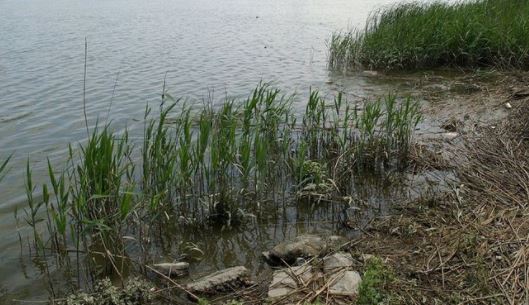
Until the 1800s, Lake Calumet was near the center of an extensive wetland area near the southern tip of Lake Michigan. Like other wetland areas, the Lake Calumet area and its rivers were a center of Native American life and settlement. The Field Museum maintains databases of archeological data on these settlements.[2][3]
In 1861, the Lake Calumet region was mapped into Hyde Park Township, south of what was then the town of Chicago. In the 1880s, because the lake’s Calumet River created shipping opportunities to connect into Lake Michigan, the swampy zone was rapidly filled and developed by industry. Hyde Park Township developed rapidly and was annexed into Chicago in 1889. The area remains heavily industrialized today.[4]
The Chicago neighborhood of Pullman was developed as a company town with residences and services offered for rent to the workers in railroad passenger car factories. The complex, now a National Monument, is sited on the lake’s west shore. Steel mills began to line the Calumet River. The Illinois Central railroad was built nearby.
In the 1950s, part of the former lakebed was used as a right-of-way for a freeway, which was originally named in the lake’s honor as the Calumet Expressway.
