
Patrick Troughton
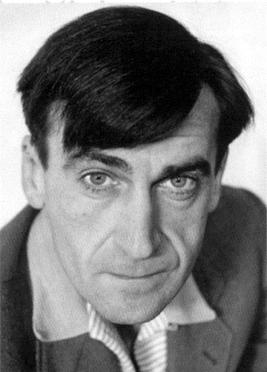
Patrick George Troughton (/ˈtraʊtən/;[1] 25 March 1920 – 28 March 1987) was an English actor. He was classically trained for the stage but became most widely known for his roles in television and film. His work included appearances in several fantasy, science fiction and horror films, and playing the second incarnation of the Doctor in the long-running British science-fiction television series Doctor Who from 1966 to 1969; he reprised the role in 1972–1973, 1983 and 1985.
Troughton was born on 25 March 1920[2] in Mill Hill, Middlesex, England, to Alec George Troughton (1887–1953), a solicitor, and Dorothy Evelyn Offord (1886–1979), who married in 1914 in Edmonton. Patrick had an elder brother, Alec Robert (1915–1994), and a younger sister, Mary Edith (1923–2005). Troughton attended Mill Hill School[3] and continued to live in Mill Hill for most of his life. While at Mill Hill School, he acted in a production of J. B. Priestley’s Bees on the Boat Deck in March 1937.
Troughton studied at the Embassy School of Acting at Swiss Cottage,[2] being tutored by Eileen Thorndike. He was later awarded an acting scholarship at the Leighton Rallius Studios at the John Drew Memorial Theatre on Long Island, New York, in the United States of America.[2]
When the Second World War broke out, he abandoned his studies in the U.S. and returned to England to enlist in His Majesty’s Armed Forces. During the passage across the North Atlantic Ocean, the ship carrying him struck a sea mine off the coast of Great Britain, from which he escaped in a lifeboat as the vessel foundered. On arrival back in England, whilst waiting to join the Armed Forces, he briefly worked with the Tonbridge Repertory Company.[2]
In 1940, Troughton enlisted with the Royal Navy, receiving a commission as a lieutenant with the RNVR. He was deployed on East Coast Convoy duty from February to August 1941, and then with Coastal Forces’ Motor Gun Boats based at Great Yarmouth from November 1942 to 1945, operating in the North Sea and English Channel. During his service with the MGBs, he was on one occasion involved in an action against Kriegsmarine E-boats which resulted in one of the enemy craft being destroyed by ramming, whilst Troughton’s boat and another destroyed two more with their gunfire. His decorations included the 1939–45 Star, the Atlantic Star, and was mentioned in dispatches “for outstanding courage, leadership and skill in many daring attacks on enemy shipping in hostile waters”.[4][5] He used to wear a tea cosy on his head in cold weather in the North Sea.[6]
