
Sand and stones
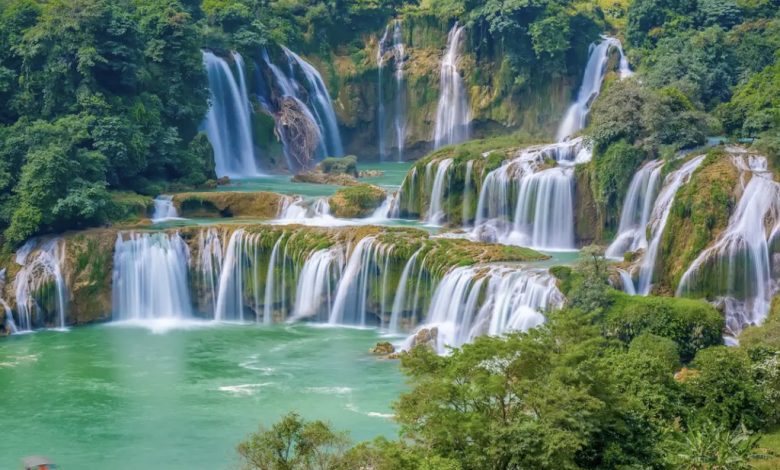
Sand and stones carried by the watercourse therefore increase erosion capacity.[1] This causes the waterfall to carve deeper into the bed and to recede upstream.
Often over time, the waterfall will recede back to form a canyon or gorge downstream as it recedes upstream, and it will carve deeper into the ridge above it.[6] The rate of retreat for a waterfall can be as high as one-and-a-half metres per year.[1]
The Dettifoss in Iceland on the 31st of July 1972
Often, the rock stratum just below the more resistant shelf will be of a softer type, meaning that undercutting due to splashback will occur here to form a shallow cave-like formation known as a rock shelter under and behind the waterfall.
Eventually, the outcropping, more resistant cap rock will collapse under pressure to add blocks of rock to the base of the waterfall. These blocks of rock are then broken down into smaller boulders by attrition as they collide with each other, and they also erode the base of the waterfall by abrasion, creating a deep plunge pool in the gorge downstream.
