
Igneous rock
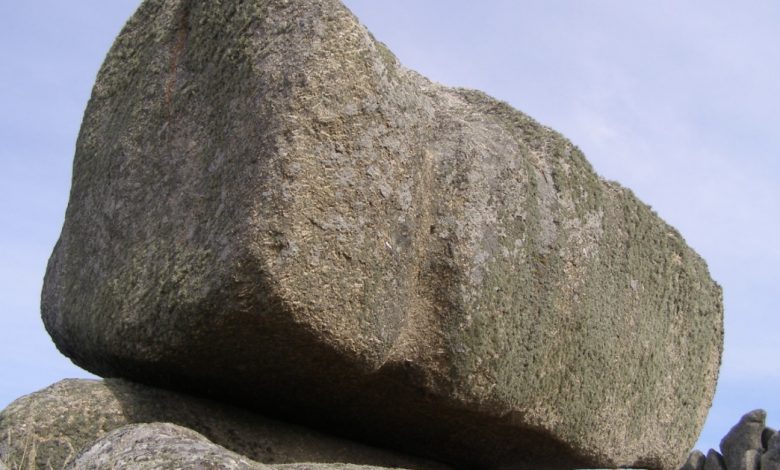
Sample of igneous gabbro
Igneous rock (derived from the Latin word igneus, meaning of fire, from ignis meaning fire)[8] is formed through the cooling and solidification of magma or lava. This magma may be derived from partial melts of pre-existing rocks in either a planet’s mantle or crust. Typically, the melting of rocks is caused by one or more of three processes: an increase in temperature, a decrease in pressure, or a change in composition.[9]:591–599
Igneous rocks are divided into two main categories:
Plutonic or intrusive rocks result when magma cools and crystallizes slowly within the Earth’s crust. A common example of this type is granite.
Volcanic or extrusive rocks result from magma reaching the surface either as lava or fragmental ejecta, forming minerals such as pumice or basalt.[4]
Magmas tend to become richer in silica as they rise towards the Earth’s surface, a process called magma differentiation. This occurs both because minerals low in silica crystallize out of the magma as it begins to cool (Bowen’s reaction series) and because the magma assimilates some of the crustal rock through which it ascends (country rock), and crustal rock tends to be high in silica. Silica content is thus the most important chemical criterion for classifying igneous rock.[6] The content of alkali metal oxides is next in importance.[10]
About 65% of the Earth’s crust by volume consists of igneous rocks. Of these, 66% are basalt and gabbro, 16% are granite, and 17% granodiorite and diorite. Only 0.6% are syenite and 0.3% are ultramafic. The oceanic crust is 99% basalt, which is an igneous rock of mafic composition. Granite and similar rocks, known as granitoids, dominate the continental crust.[11][12]
