
Constitution of Vermont
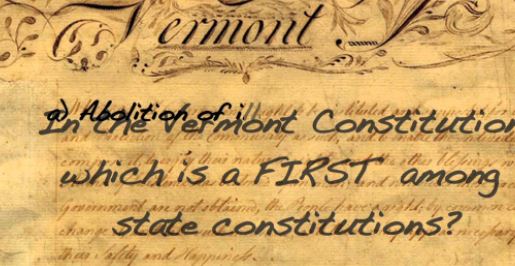
From 1777 to 1791, Vermont was an independent country, often referred to in the present day as the Vermont Republic. During that time it was usually called the State of Vermont but sometimes called the Commonwealth of Vermont or the Republic of Vermont. Its first constitution, drafted in 1777, was among the most far-reaching in guaranteeing personal freedoms and individual rights. In particular, it banned adult slavery, saying male slaves become free at the age of 21 and females at 18. The 1777 constitution’s Declaration of Rights of the Inhabitants of the State of Vermont anticipated the United States Bill of Rights by a dozen years.
The first chapter, a “Declaration of Rights of the Inhabitants of the State of Vermont”, is followed by a “Plan or Frame of Government” outlining the structure of governance. It provided that the governor would be elected by the freemen of the state, who could vote regardless of whether they owned property, that each town would be represented in the legislative assembly, that there would be a court of law in each county, and that the legislative assembly and the governor’s council would jointly hold legislative power.
