
Passes
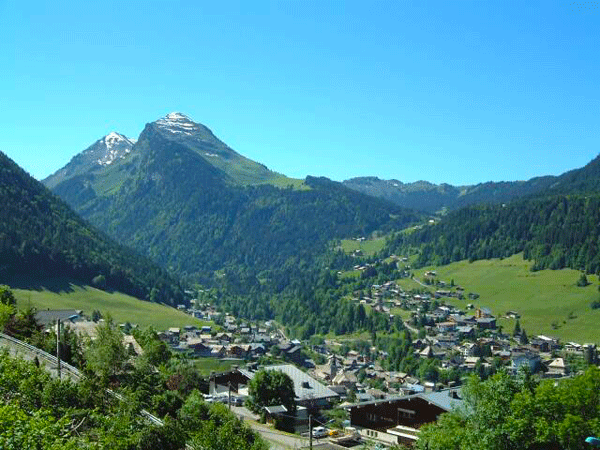
The Alps have been crossed for war and commerce, and by pilgrims, students and tourists. Crossing routes by road, train or foot are known as passes,
and usually consist of depressions in the mountains in which a valley leads from the plains and hilly pre-mountainous zones.[21] In the medieval period hospices were established by religious orders at the summits of many of the main passes.[10] The most important passes are the Col de l’Iseran (the highest), the Col Agnel, the Brenner Pass, the Mont-Cenis, the Great St.
Bernard Pass, the Col de Tende, the Gotthard Pass, the Semmering Pass, the Simplon Pass, and the Stelvio Pass.[22] Crossing the Italian-Austrian border, the Brenner Pass separates the Ötztal Alps and Zillertal Alps and has been in use as a trading route since the 14th century. The lowest of the Alpine passes at 985 m (3,232 ft), the Semmering crosses from Lower Austria
to Styria; since the 12th century when a hospice was built there, it has seen continuous use. A railroad with a tunnel 1.6 km (1 mi) long was built along the route of the pass in the mid-19th century. With a summit of 2,469 m (8,100 ft), the Great St.
Bernard Pass is one of the highest in the Alps, crossing the Italian-Swiss border east of the Pennine Alps along the flanks of Mont Blanc. The pass was used by Napoleon Bonaparte to cross 40,000 troops in 1800.
